
Description
PelGar produces a range of high quality, palatable formulations based on the active ingredients difenacoum, bromadiolone and brodifacoum; the most widely used anticoagulants in rodenticides. Each active has a different level of toxicity to mice and rats as shown in the table below. All PelGar rodenticides include a dye colour for visual identification as a toxin and the bittering agent denatonium benzoate.
Extreme caution needs to be taken when using rodenticides to ensure that non-target species such as pets, livestock, birds and children do not come in contact with the poison. Therefore is important that rodent baits are always secured and protected, ideally in a bait station, and once you have controlled the problem all toxic baits need to be removed from the area. In any case of suspected poisoning consult a doctor or veterinarian.
| Anticoagulant | LD50 mg ai/kg Mouse/Rat |
Bait Concentration (PPM) | LD50 (g of bait) Mouse/Rat* |
LD50 (g of bait/kg) Dog |
| Difenacoum | 0.8 / 1.80 | 50 | 0.4 / 9.0 | 1000 |
| Bromadiolone | 1.75 / 1.13 | 50 | 0.9 / 5.6 | 200 |
| Brodifacoum | 0.40 /0.27 | 50 | 0.2 / 1.4 | 5.0 |
* Typical 25g mouse and 250g rat. In countries where 25ppm baits are available the above figures should be doubled.
For example, a 25 gram mouse only needs to consume 0.4 grams of finished difenacoum rodenticide to ingest a lethal dose. The figures for dogs are provided only as an indication of the relative toxicity to non-target animals.
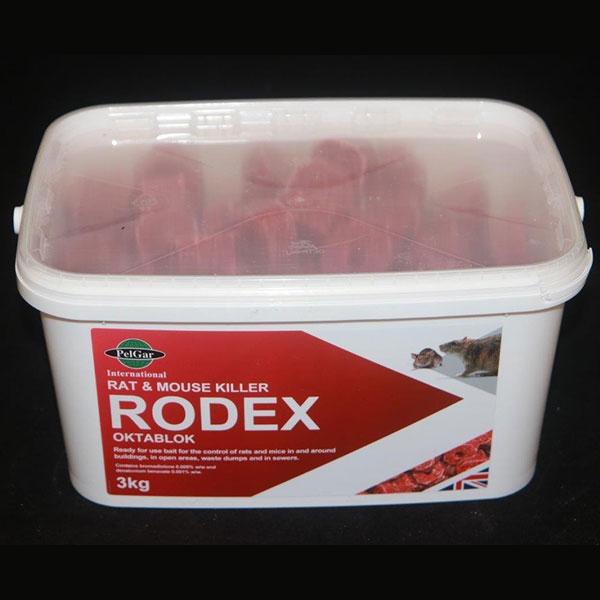
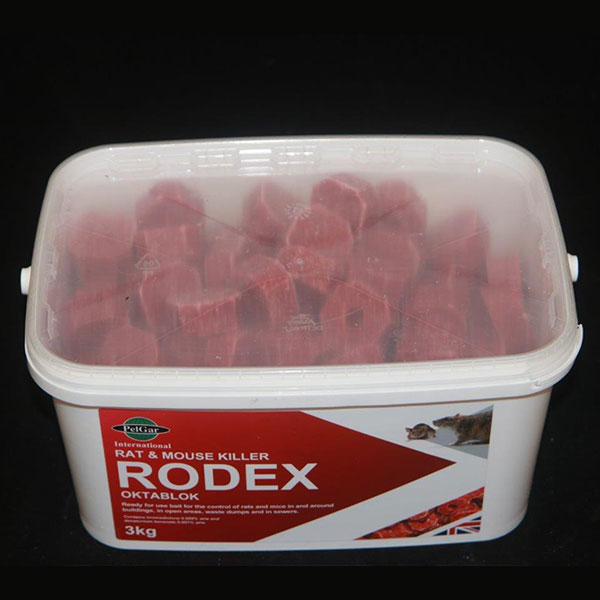
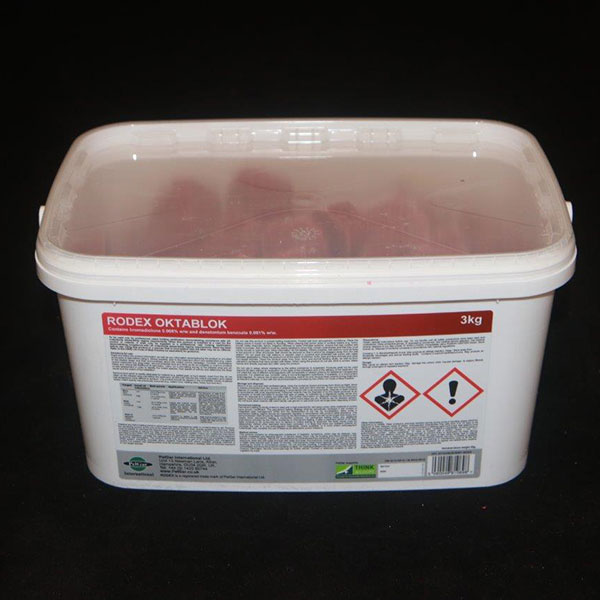
Contains: Difenacoum 0.005% w/w and denatonium benzoate 0.001% w/w.
Control: Rats and mice.
Application: In and around buildings, open areas, waste dumps and sewers.
Part No. RTRODEXBLOCK3KG